
Tending Your Roots
The inner life of your family starts with the inner life of the people in it.
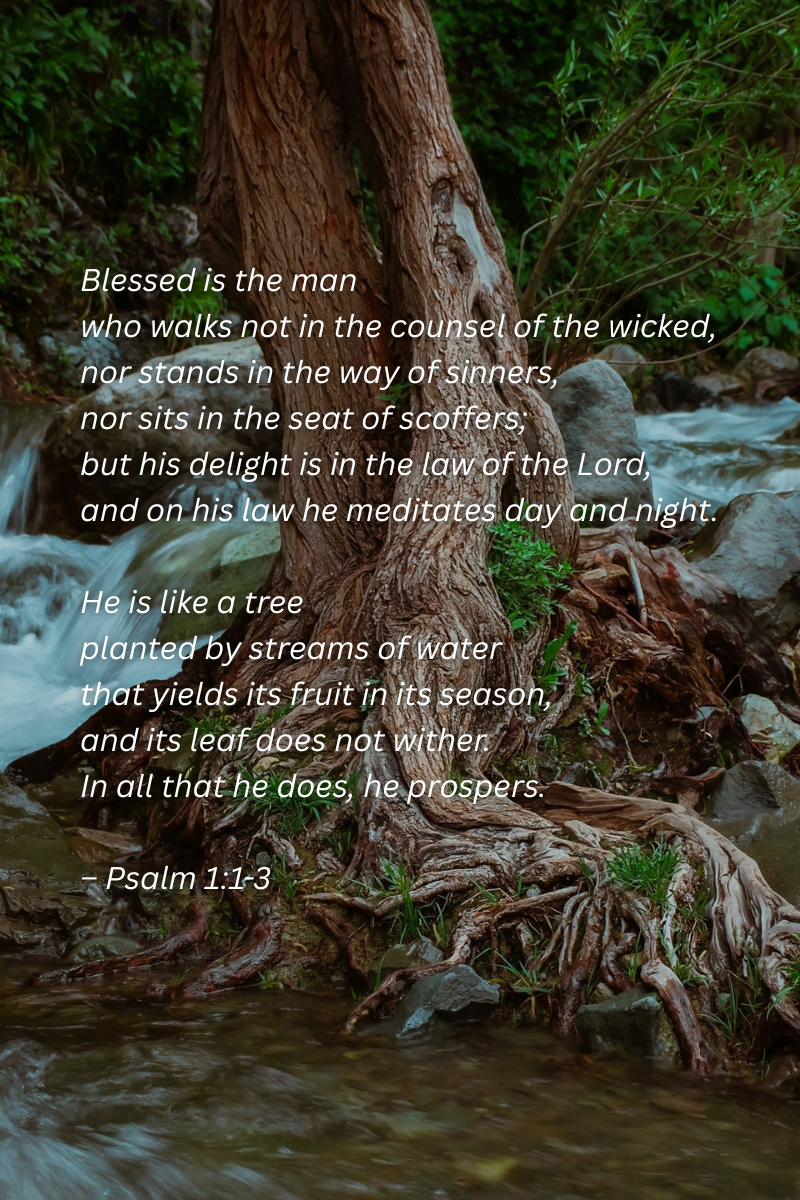
The roots of a tree provide a critical anchor and foundation while connecting it to sources of nourishment.
Tending your roots is about reflecting upon your sense of place in the world and the people and resources around you.
When you tend your roots with intention, you grow steadier and more resilient.
What’s possible is to grow stronger yourself, so you can be stronger for those closest to you.
So, this page is a starting point. It’s a curated library to help you look inward, so you can be strong for those who matter most.
Building a Philosophy of Life
Much of our ability to be satisfied comes down to defining success for ourselves, rather that aimlessly chasing the many competing definitions society places on us. Doing so allows us to experience contentment while knowing what we’re actively contending for. And so much of life is about having a goal worth aiming for more than actually reaching the goal. Life is truly about the journey, the story we’re living, rather than the destination. The fun part is crafting the vision, living the story, choosing the goals worth pursuing.
-
Off Balance — Matthew Kelly: Argues that chasing "balance" is the wrong goal and reframes success around what actually satisfies you. Good for someone who feels busy but directionless, unsure what they're even optimizing for.
Happier — Tal Ben-Shahar: A framework for happiness built on aligning present enjoyment with future meaning, from the Harvard positive psychology course. Good for someone who tends to defer joy, always chasing the next milestone.
Life Worth Living — Miroslav Volf, Matthew Croasmun & Ryan McAnnally-Linz: Walks through competing visions of "the good life" across philosophy and religion so you can articulate on your own. Good for those who’ve never explicitly defined what a good life means to themself.
Reconciling with the Reality of Death
If not for the reality of death, there would be little need for a philosophy of life. It’s a lifelong process reconciling with life’s hardest reality, but doing so frees you up to truly seize the gift that is life.
-
On Death — Timothy Keller: A short, direct reflection on mortality from a pastoral perspective, written while Keller himself was facing terminal illness. Good for someone avoiding the topic entirely or looking for a faith-informed lens on it.
On the Shortness of Life — Seneca: The Stoic case that life feels short mainly because people waste it, not because it's actually brief. Good for someone who wants a bracing, philosophical (not religious) angle.
Living Life Backward — David Gibson: Draws on Ecclesiastes to argue that keeping death in view clarifies how to live now. Good for someone who wants a Scripture-based meditation rather than a self-help framework.
When the Game Is Over, It All Goes Back in the Box— John Ortberg: Uses the metaphor of a board game to argue that keeping death in view should reshape how tightly we hold onto possessions, status, and achievement while we're alive. Good for someone who intellectually knows life is short but wants a memorable, everyday framework for actually living that way.
Managing Yourself
We all are aware there’s a gap between who we want to be, who we truly know we have the potential to be, and yet the ways in which we fall short. This is the work of self-awareness and self-control. As we learn to manage ourself in the moment, we can indeed narrow the gap.
-
Permission to Feel— Marc Brackett: A case for emotional literacy as a skill, with a practical framework (RULER) for identifying and regulating emotions. Good for someone who intellectualizes or suppresses feelings rather than processing them.
Eat Move Sleep— Tom Rath: Short, practical guidance on the basic physical habits that most affect daily energy and mood. Good for someone whose self-management problem is really a physical energy problem.
Lead Yourself First— Raymond Kethledge & Michael Erwin: Makes the case for solitude as a discipline leaders need, not a luxury, using historical examples. Good for someone whose days are so full of input they never think clearly.
Rest— Alex Soojung-Kim Pang: Argues rest is a skill that enables better work, not the opposite of it, drawing on the routines of highly productive people. Good for someone who feels guilty resting or sees it as wasted time.
Discerning Your Path, Especially in Life’s Second Half
The first half of life is often laid out for us. It’s about coming into your own sense of self and establishing a way of sustaining yourself. It’s a wonderful thing when young people have the ability and interest to ask the deeper questions, but it’s certainly in life’s second half where we have the wisdom, maturity and opportunity to really create something uniquely true and deeply fulfilling.
-
Designing Your Life — Bill Burnett & Dave Evans: Applies design-thinking methods (prototyping, reframing problems) to building a fulfilling life and career. Good for someone who wants a practical, iterative process rather than abstract reflection. Checkout the workbook too!
The Second Mountain — David Brooks: Contrasts self-focused "first mountain" success with a second, commitment-driven season oriented toward others. Good for someone who's achieved conventional success but feels something's still missing.
From Strength to Strength— Arthur Brooks: Uses research on cognitive decline and career trajectories to argue for redefining success in the second half of life. Good for someone fearing professional irrelevance as they age.
Finishing Well — Bob Buford: Profiles people who made the transition to significance well, drawing lessons on what distinguishes them. Good for someone wanting concrete models of others who've made this shift, not just theory.