
There is No Good Card for That: A Book on Showing Up Well
When someone you love is hurting, the right words matter less than you think.
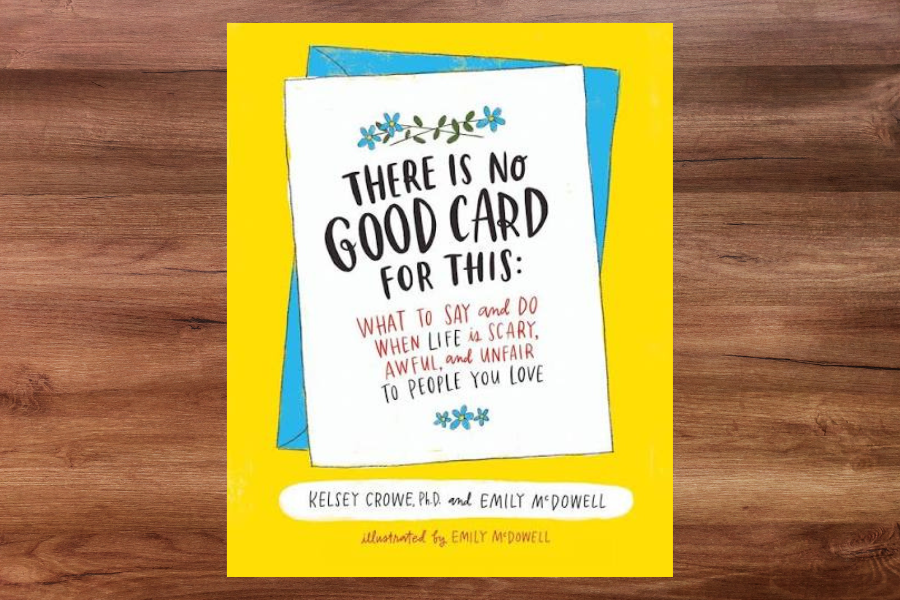
One of the books we keep coming back to on this topic is There Is No Good Card for This by Kelsey Crowe and Emily McDowell. It's written for exactly the moment most of us dread when someone we care about is going through something hard, and we have no idea what to say or do. It could be a diagnosis, a layoff, a loss, or a season we know is just quietly, relentlessly difficult for them. We freeze, we say something well-intentioned but hollow or we disappear entirely because showing up feels riskier than staying away.
Crowe and McDowell's core insight is that the gestures which actually help someone rarely sound profound. They're specific, they're small, and they show up more than once. Here are a handful of the insights from the book we've found most useful for any season when someone we love is struggling.
Comfort flows toward the person in crisis, not away from them. The authors describe this as a kind of concentric-circles principle: the person at the center of the hard thing gets support, and anyone further out processes their own discomfort elsewhere (not onto the person who's suffering). It's a simple reframe, but it changes the question from "how do I feel about this" to "what does this person actually need from me right now."
Vague offers rarely get accepted. "Let me know if you need anything" is too vague. It’s courteous but ineffective. A specific offer is far easier to say yes to: naming a day, a task, a time. "I'm bringing dinner Thursday, does 6pm work?" does more good than an open-ended offer that puts the burden back on the person struggling and perhaps already feeling like a burden on others.
The good intentions everyone reaches for often land wrong. Lines like "everything happens for a reason" or "at least they're not suffering anymore" are attempts to soften pain, but they tend to minimize it instead. The authors call this "empathy avoidance": comfort aimed more at the comforter's discomfort than the sufferer's actual experience. Sometimes terrible things just happen and there’s no way to sugar-coat it. In those times, validating the hardship is what’s needed, often by simply saying, “That’s so hard.”
Showing up once isn't showing up. The first week after hard news is usually full of people. The months after are often quiet, which is exactly when a lot of people feel most alone. A repeated, ordinary gesture (a text, a card, a standing coffee date) matters more over time than one perfect response in the beginning.
You don't need to fix it. You need to stay. Sitting with someone in discomfort, without rushing to solve it or make it feel better, is itself the gift. As the authors put it, people going through something hard don't need someone with all the answers, they need someone who stays around as a companion.
A few questions worth sitting with:
When you've been the one struggling, what gesture actually meant something to you?
Is there someone in your life right now who could use a specific, small act of presence rather than a vague offer?
What's one concrete thing you could do this week (not someday, but this week) for someone carrying something hard?
Think it through alone or with trusted friend further removed from the center of the situation and then take action showing up, assertively caring for the other in a way that insists the kindness be accepted.
Resource referenced: There Is No Good Card for This: What To Say and Do When Life Is Scary, Awful, and Unfair to People You Love by Kelsey Crowe and Emily McDowell