
Rest: How to Think About Balance
Why the families who go the distance are the ones who've learned to stand on two legs, not one.
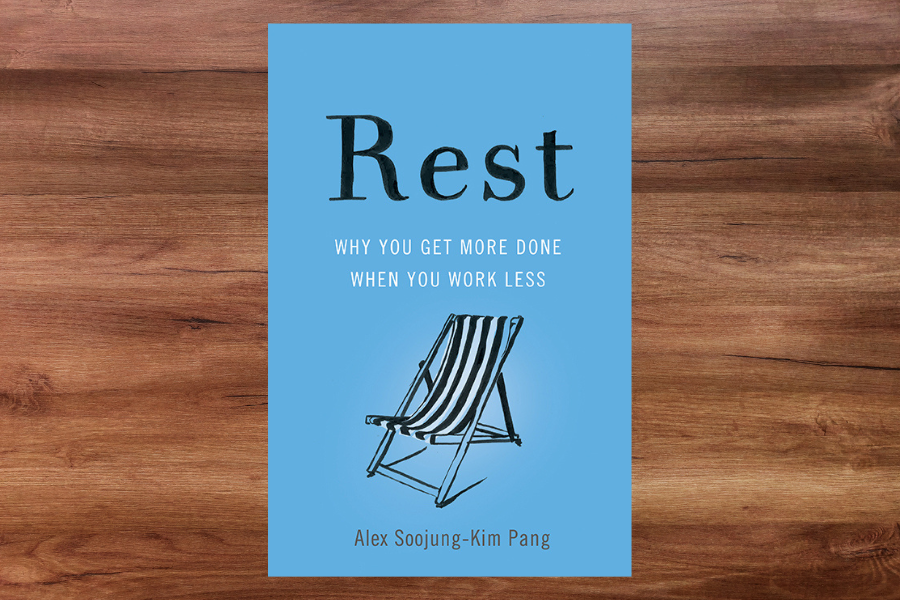
One of the books that's shaped how we think about balance is Rest: Why You Get More Done When You Work Less by Alex Soojung-Kim Pang. Pang, a Silicon Valley-based researcher, spent years studying how history's most accomplished people (scientists, artists, leaders, and the like) actually structured their time, and his central finding cuts against almost everything we assume about getting ahead: rest isn't the thing you do once the important work is finished. It's a partner to the work itself.
We want to recommend it here because the way Pang frames rest doesn't just apply to careers. It applies to marriages, parenting, friendships, and anywhere you're trying to keep showing up well, over years, not just this week.
Here's the picture that's stuck with us most: think of one leg as work, the other as rest. Trying to get through life standing on one leg at the expense of the other is technically possible for a while, but nobody walks that way for long. Work and rest aren't opposing forces competing for your time. They're partners. Neglect one, and eventually it costs you both.
There are seasons like a launch at work, a newborn in the house, or a hard stretch of busyness that just needs to be pushed through, where working more and resting less is the right call for a while. But when we forget to shift back, fatigue sets in, and we risk falling over. Not just at work, but at home with the people who need us most.
A few of the specific insights from the book we've found most useful:
Rest isn't your brain going idle. Once you stop concentrating on a task, a network in the brain, called the Default Mode Network, switches on and starts doing quiet, essential work: consolidating memory, processing emotion, sharpening judgment. What we call "rest" is often your brain doing a different, necessary kind of work, not doing nothing.
Rest as exercise. Physical activity isn't a distraction from mental and relational demands, rather it's often what makes us capable of meeting them well. Pang points to Nelson Mandela, who maintained a disciplined exercise regimen throughout his 28 years of imprisonment, crediting it as central to his mental clarity and peace of mind.
Rest as play. Fully absorbing, low-stakes activity (the kind that leaves no room in your head for anything else) does something exercise alone can't. Winston Churchill described painting as the one thing that could entirely absorb his mind regardless of the weight of the moment, because it drew on an entirely different part of him than the one carrying his responsibilities.
Rest as novelty. A change of environment such as a walk somewhere new, a weekend away, or simply a different commute frees up mental space in a way that staying in the same setting rarely does. You don't need a sabbatical for this to work. A shift in scenery and a little intention goes a long way.
Rest as recovery. The most basic and most neglected form: sleep, margin, actual downtime. Pang notes that history's most creative and productive people organized their lives around their work but not their days. Their output came from focused hours, not endless ones.
Bringing It Home
Years ago, coaching clients through seasons of burnout, this book and the two-legs picture was often where we'd start. Almost without exception, the people who showed up exhausted had let one leg, work, carry all the weight at the expense of the other. And it was never just their productivity that suffered. It was their marriage, their presence with their kids, and/or their patience with the people closest to them.
That's the piece that matters most for a family. Burnout doesn't only cost you at the office, it costs the people at your table. The version of you that's rested is the version with patience for a hard conversation with a teenager, presence to actually listen to your spouse at the end of a long day, and the energy to be curious instead of just getting through it.
So, which leg have you been favoring lately? And what's one small, specific way you could put some weight back on the other this week?
Resource referenced: Rest: Why You Get More Done When You Work Less by Alex Soojung-Kim Pang